🎉 Up to 70% Off Selected ItemsShop Sale
$70.00
Original: $200.00
-65%Basilius Besler—
$200.00
$70.00The Story
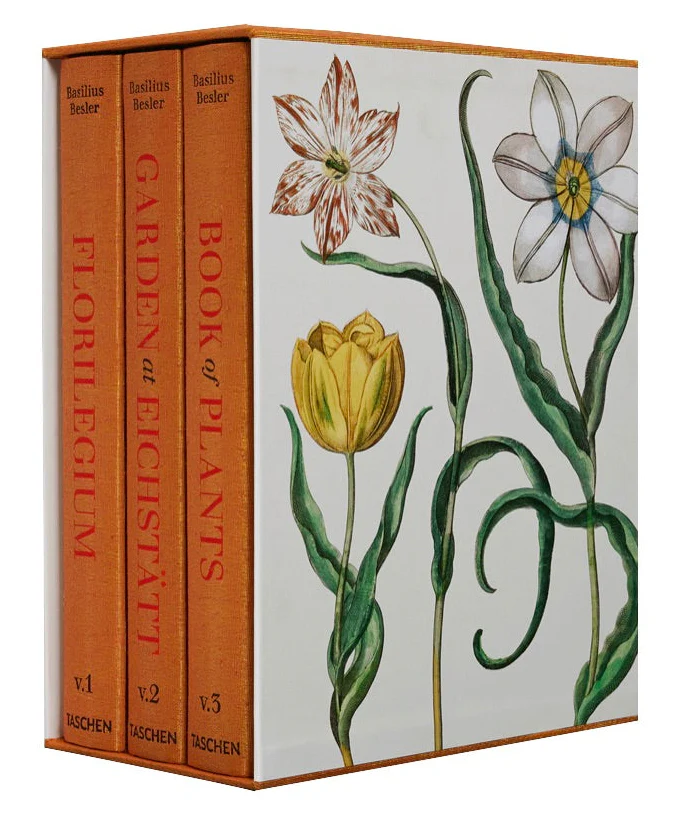
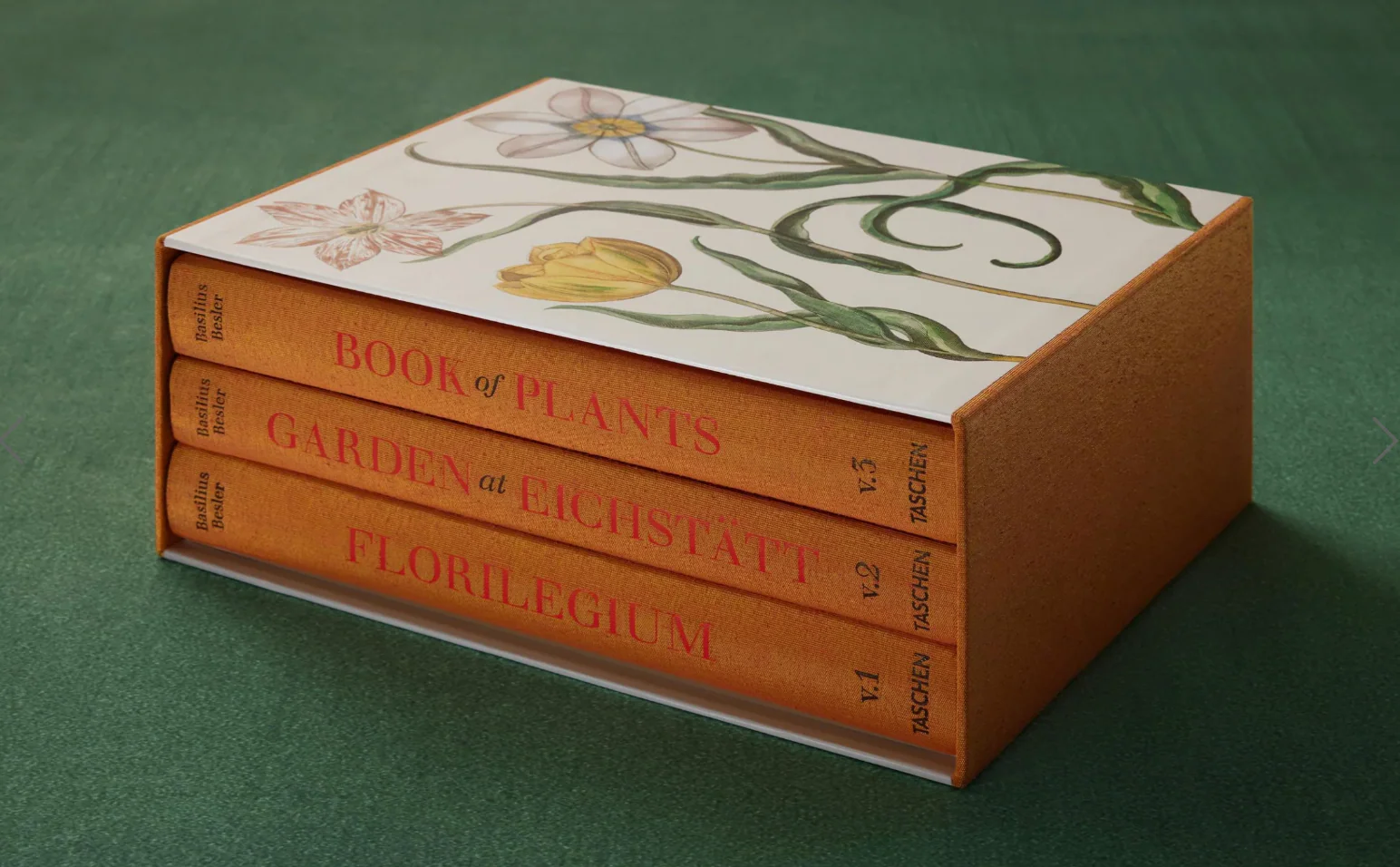
A complete facsimile edition of the three-volume Hortus Eystettensis
When Prince-Bishop Johann Konrad von Gemmingen (1593/95–1612) undertook a radical renovation of the Willibaldsburg Castle, overlooking the Altmühl River in Eichstätt, Bavaria, he also created a surrounding palatial pleasure garden of magnificence and grandeur. To preserve the garden for future generations – and provide an ‘evergreen’ record of its contents, compiling plants from all four seasons and presenting them in that order – he commissioned the garden’s director, Nuremberg apothecary Basilius Besler(1561–1629), and a team of engravers to immortalize its treasures in print.
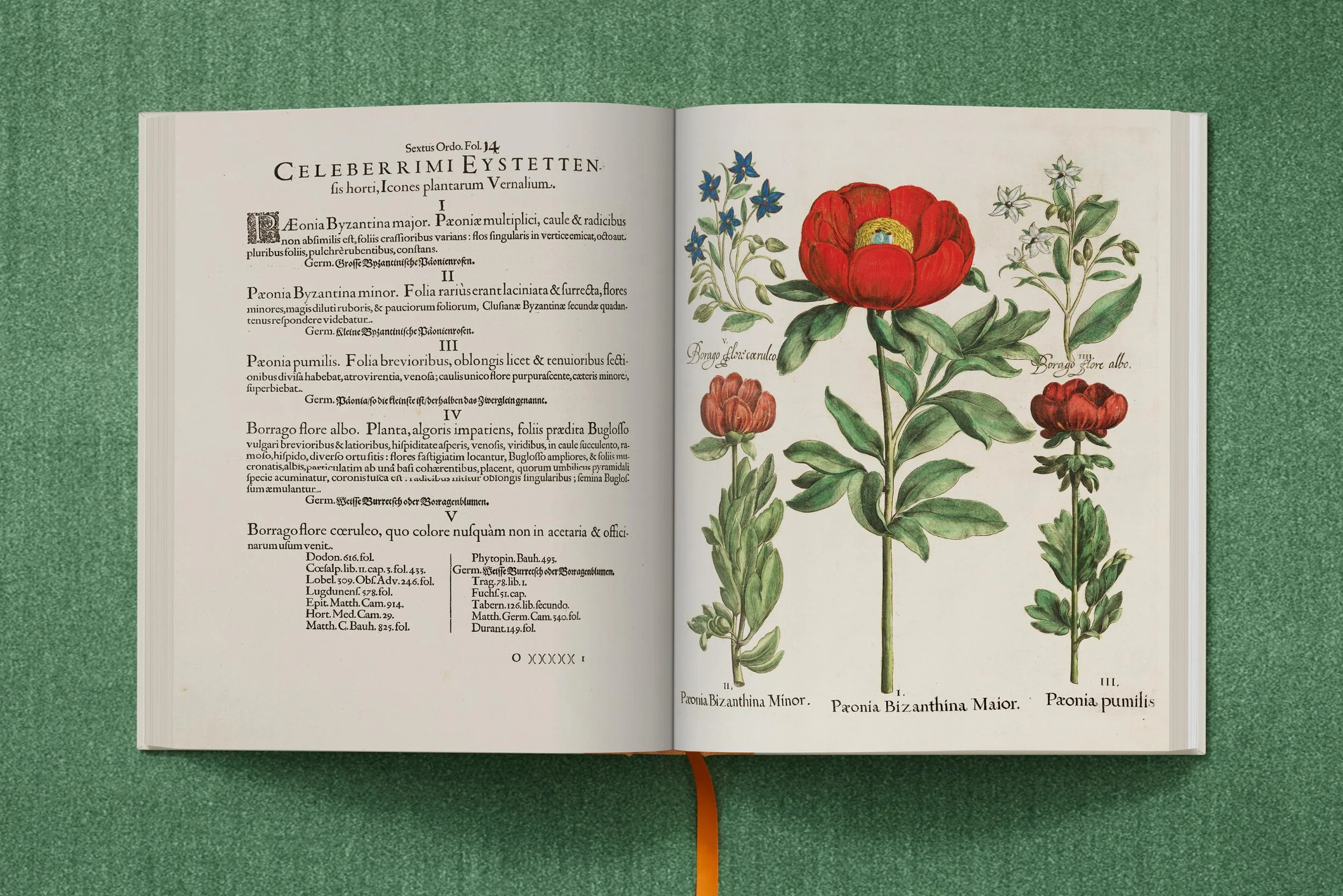
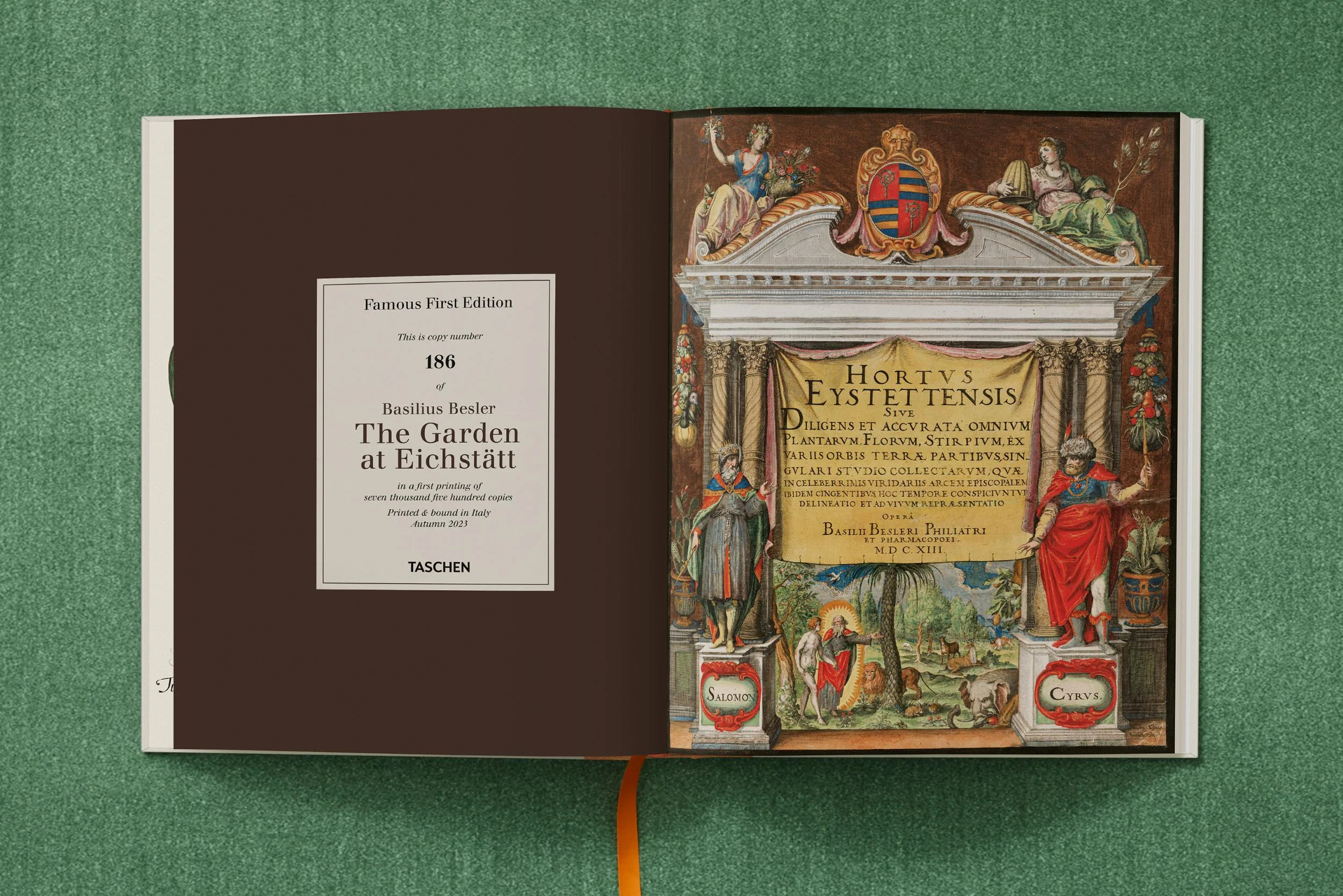
The resulting Hortus Eystettensis, published in Nuremberg in 1613 and containing 367 hand-colored plates and detailed descriptions, was a work of meticulous execution and spectacular diversity, and remarkably expensive for its time. As the garden contained a variety of plants imported from exotic locales, the three volumes exhibited a remarkable range, covering a total of 90 families and 340 genera. Due to the decorative, stylized execution of these illustrations, which began to see plants in aesthetic, rather than merely practical or medicinal terms, the book is seen as a milestone in the art of botanical illustration. While published before a time of standardized classification systems, it was nonetheless later described by Carl Linnaeus as an “incomparable work”.
The resulting Hortus Eystettensis, published in Nuremberg in 1613 and containing 367 hand-colored plates and detailed descriptions, was a work of meticulous execution and spectacular diversity, and remarkably expensive for its time. As the garden contained a variety of plants imported from exotic locales, the three volumes exhibited a remarkable range, covering a total of 90 families and 340 genera. Due to the decorative, stylized execution of these illustrations, which began to see plants in aesthetic, rather than merely practical or medicinal terms, the book is seen as a milestone in the art of botanical illustration. While published before a time of standardized classification systems, it was nonetheless later described by Carl Linnaeus as an “incomparable work”.
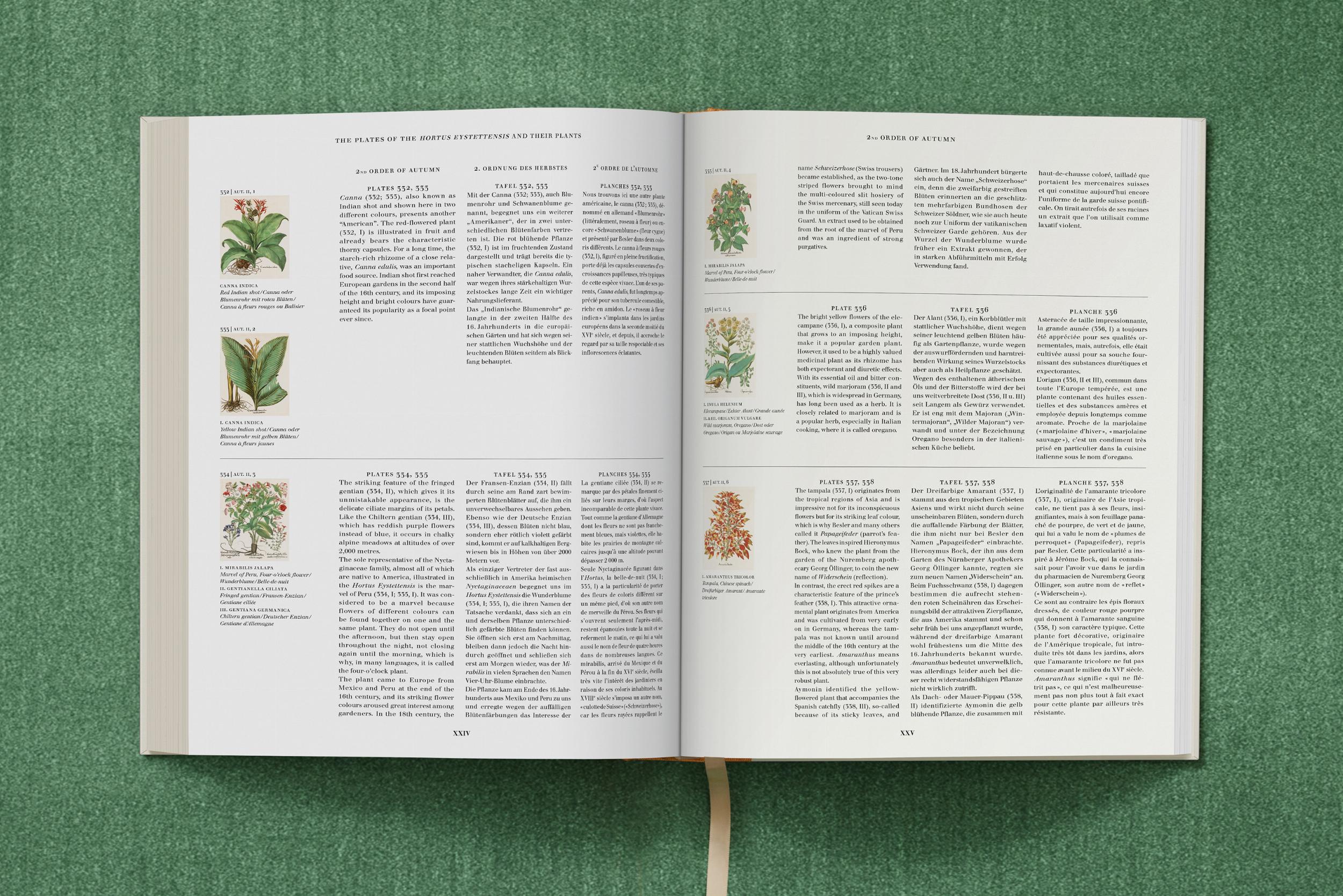
Offering high-quality reproductions of these arresting illustrations, based on the copy of the Hortus Eystettensis at the University Library of Eichstätt-Ingolstadt, this facsimile edition is accompanied by detailed plate descriptions of each plant’s botanical, pharmaceutical, and symbolic significance and an appendix of further essays which place the garden and the book in their historical contexts.
Details & Craftsmanship
Every detail has been carefully considered to bring you the perfect product.
Details & Craftsmanship
Every detail has been carefully considered to bring you the perfect product.
Details & Craftsmanship
Every detail has been carefully considered to bring you the perfect product.
Details & Craftsmanship
Every detail has been carefully considered to bring you the perfect product.
Description
A complete facsimile edition of the three-volume Hortus Eystettensis
When Prince-Bishop Johann Konrad von Gemmingen (1593/95–1612) undertook a radical renovation of the Willibaldsburg Castle, overlooking the Altmühl River in Eichstätt, Bavaria, he also created a surrounding palatial pleasure garden of magnificence and grandeur. To preserve the garden for future generations – and provide an ‘evergreen’ record of its contents, compiling plants from all four seasons and presenting them in that order – he commissioned the garden’s director, Nuremberg apothecary Basilius Besler(1561–1629), and a team of engravers to immortalize its treasures in print.
The resulting Hortus Eystettensis, published in Nuremberg in 1613 and containing 367 hand-colored plates and detailed descriptions, was a work of meticulous execution and spectacular diversity, and remarkably expensive for its time. As the garden contained a variety of plants imported from exotic locales, the three volumes exhibited a remarkable range, covering a total of 90 families and 340 genera. Due to the decorative, stylized execution of these illustrations, which began to see plants in aesthetic, rather than merely practical or medicinal terms, the book is seen as a milestone in the art of botanical illustration. While published before a time of standardized classification systems, it was nonetheless later described by Carl Linnaeus as an “incomparable work”.
The resulting Hortus Eystettensis, published in Nuremberg in 1613 and containing 367 hand-colored plates and detailed descriptions, was a work of meticulous execution and spectacular diversity, and remarkably expensive for its time. As the garden contained a variety of plants imported from exotic locales, the three volumes exhibited a remarkable range, covering a total of 90 families and 340 genera. Due to the decorative, stylized execution of these illustrations, which began to see plants in aesthetic, rather than merely practical or medicinal terms, the book is seen as a milestone in the art of botanical illustration. While published before a time of standardized classification systems, it was nonetheless later described by Carl Linnaeus as an “incomparable work”.
Offering high-quality reproductions of these arresting illustrations, based on the copy of the Hortus Eystettensis at the University Library of Eichstätt-Ingolstadt, this facsimile edition is accompanied by detailed plate descriptions of each plant’s botanical, pharmaceutical, and symbolic significance and an appendix of further essays which place the garden and the book in their historical contexts.